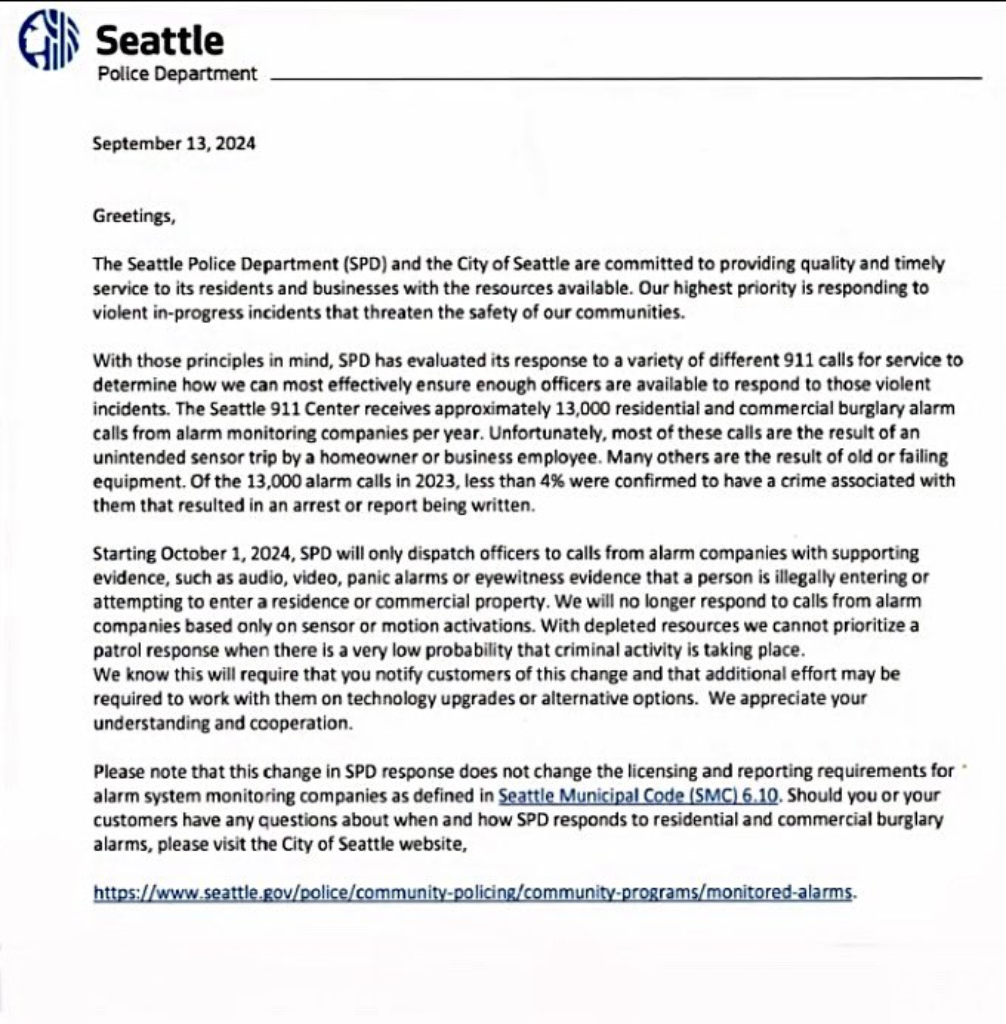
The Seattle Police Department (SPD) will no longer respond to burglar alarms without “supporting evidence” due to dwindling resources.
Seattle was one of many liberal cities that defunded their police departments during the Great Awokening of 2020.
A letter penned by the SPD’s interim police chief, Sue Rahr, revealed that the changes would take place beginning Tuesday, Oct. 1.
The letter said the Seattle 911 Center receives around 13,000 burglar alarm calls a year. However, fewer than 4% of those in 2023 resulted in an arrest or a report being written.
“SPD will only dispatch officers to calls from alarm companies with supporting evidence, such as audio, video, panic alarms or eyewitness evidence that a person is illegally entering or attempting to enter a residence or commercial property,” wrote Rahr in her letter.
Washington alarm companies have expressed concern over the proposed changes, which are set to take place with minimal notice despite the SPD reportedly working on the new policy for the best part of the year.
Nevertheless, the changes will take place at the start of October. “With depleted resources, we cannot prioritize a patrol response when there is very low probability that criminal activity is taking place,” Rahr added in her letter.
The move comes amid concerns from voters across the country about the Democrats’ commitment to funding for police.



Others expressed concern for the people of Seattle.


To read more articles like this, visit WokeSpy.
The opinions expressed by contributors and/or content partners are their own and do not necessarily reflect the views of Sean Parnell. Contact us for guidelines on submitting your own commentary.
Join the Discussion
COMMENTS POLICY: We have no tolerance for messages of violence, racism, vulgarity, obscenity or other such discourteous behavior. Thank you for contributing to a respectful and useful online dialogue.